
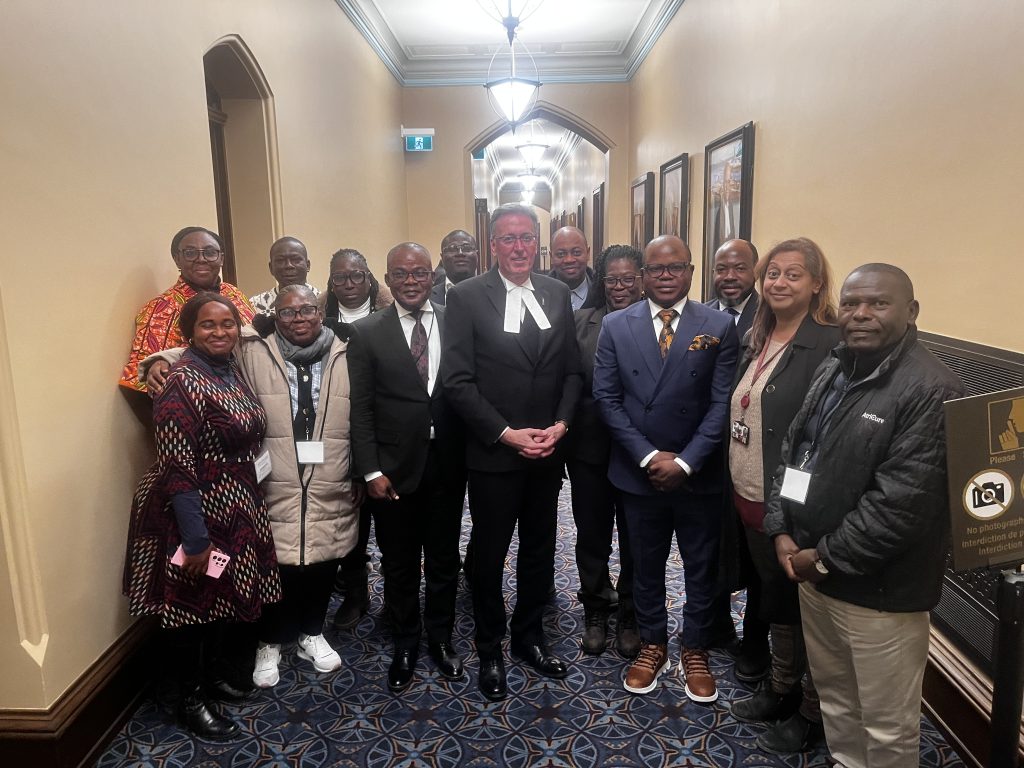
Senior parliamentary staff from Ghana, Kenya, and Togo travelled to Ottawa and Quebec City in February 2026 to exchange ideas with Canadian counterparts on a shared challenge: how to make parliaments more gender-responsive in practice, not just in principle.
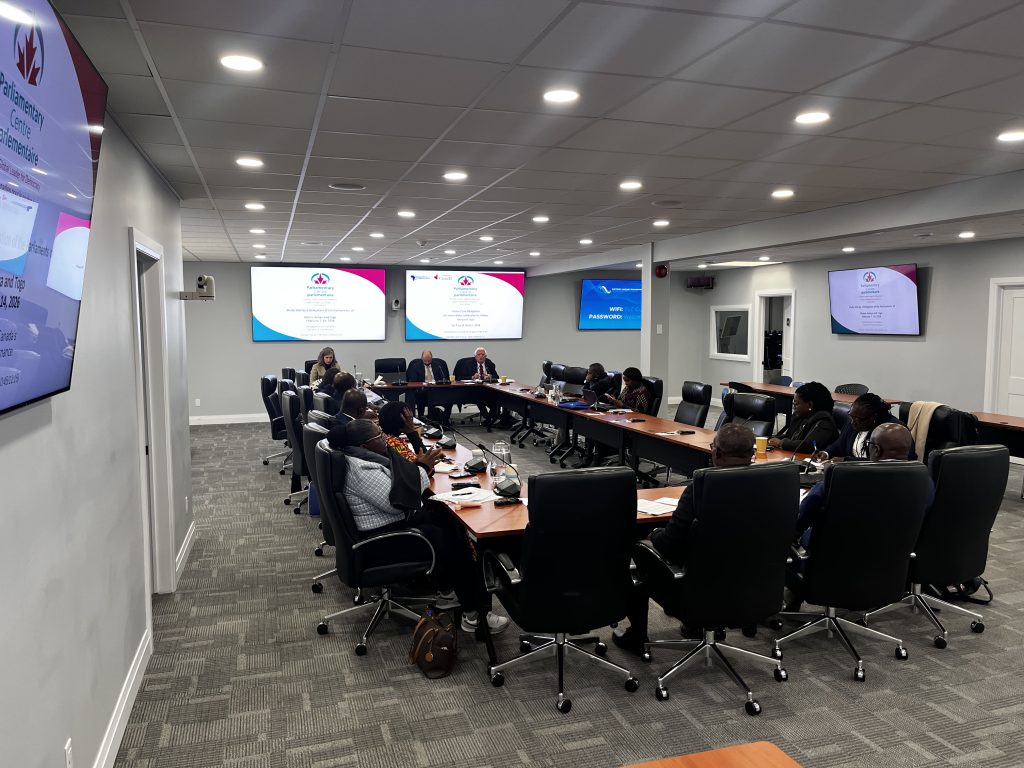
The week-long exchange was organized by the Parliamentary Centre, in partnership with the African Centre for Parliamentary Affairs, through the Inclusive Legislatures for Gender-Responsive Policies (ILGRP) project funded by Global Affairs Canada. It brought together senior parliamentary officials—including the Clerks of the Canadian Parliaments and the Secretary General of the National Assembly of Quebec—to share practical experiences and lessons emerging from ILGRP.
For the African delegations, the visit offered an opportunity to see how gender-responsive governance operates inside Canadian parliamentary systems. For Canadian counterparts, it provided insight into how the parliaments of Kenya, Ghana and Togo are advancing reforms in different political and institutional contexts.

Moving from Theory to Practice
Rather than focusing on theory, the exchange concentrated on the practical mechanics of institutional reform. Participants explored how Canada integrates gender considerations into core parliamentary functions—from human resource management and workplace culture to legislative oversight, research services, and public engagement.
A central theme emerged throughout the week: meaningful reform depends on embedding gender-responsive practices across parliamentary systems. While initiatives often begin within specialized units—such as women’s caucuses or reform committees—the challenge is ensuring those initiatives influence the everyday work of parliaments, including legislative drafting, budgeting, and administrative decision-making.
Delegations also examined the role of data and research capacity in strengthening accountability. Canadian parliamentary research services demonstrated how gender analysis supports legislative scrutiny and gender-responsive budgeting. Participants discussed how access to gender-disaggregated data and trained analysts enables committees to move beyond general commitments and assess the real impacts of policy decisions.
Workplace culture was another focus of the exchange. Delegates discussed the importance of enforcing codes of conduct, preventing harassment, and maintaining trusted reporting systems. Canadian officials shared how respectful workplace frameworks combine leadership accountability, confidential reporting processes, and clear enforcement mechanisms to support safe and professional parliamentary environments.
Sustaining Reform Through Engagement
Parliaments serve as bridges between citizens and the state. Strengthening gender-responsive governance therefore requires inclusive engagement strategies that ensure marginalized voices are heard in legislative processes.
The discussions highlighted how reforms supported by ILGRP—such as strengthening parliamentary research capacity, improving workplace policies, and advancing gender-responsive budgeting—can be reinforced through peer learning and institutional partnerships.
For ILGRP partners, the week demonstrated the value of sustained international collaboration. By connecting parliamentary institutions across continents, the project is helping translate gender equality commitments into practical governance reforms—building legislatures that are more inclusive, more accountable, and better equipped to serve all citizens.


